Discovering Djerba's cultural heritage means looking beyond a single image of the island. A street, group of homes, piece of pottery or religious building can open different questions about how the territory is used. Their interest does not come only from appearance. It also comes from relationships you can understand between places, activities and the people who explain them.
The UNESCO property for Djerba, inscribed in 2023, is a serial property reflecting a pattern of settlement in an island territory. It should not be described as making the entire island a uniformly classified area open for unrestricted visits. This guide offers a cultural approach to preparing a stay, without promising unconfirmed religious access, encounters, prices or opening hours. Its purpose is to help you build meaningful questions and clear arrangements before choosing the programme.
Choose a connecting theme for your discovery of Djerba
Architecture, places of exchange, skills and landscape can be approached separately or connected within a programme. Begin by explaining what you want to understand. You may be interested in how places are inhabited, how objects are used or how a museum presentation differs from a prepared meeting in the field.
A theme helps select visits without attempting to combine everything. It also gives a framework to questions asked on the ground. A programme becomes easier to understand when every stop has a role: observing a space, hearing an explanation or exploring a topic more deeply. This coherence matters more than a succession of well-known places visited too quickly. Djerba is not discovered only through accumulated photographs. It can be understood through a few carefully explained relationships and the time allowed for conversations. The theme helps decide which visits genuinely contribute and which may belong to another journey.
Understand what a serial inscription means
A serial property brings together identified components. This detail matters when reading a description or preparing a visit: a destination's name does not establish the status of every space. Consult heritage sources to understand the framework, then ask which parts of the programme actually allow you to explore it rather than treating the recognition as a general description of every location.
The inscription does not replace practical information. Spaces can have different uses and access conditions. A building visible from a public route is not automatically open inside. A cultural visit should distinguish documented heritage, accessible observations and confirmed services. That distinction prevents heritage recognition from becoming an unrestricted commercial promise. It also respects places that continue to have everyday, private or religious functions. Understanding what is available and what is not can make a visit clearer without diminishing the significance of the heritage being discussed.
Observe relationships between settlement and environment
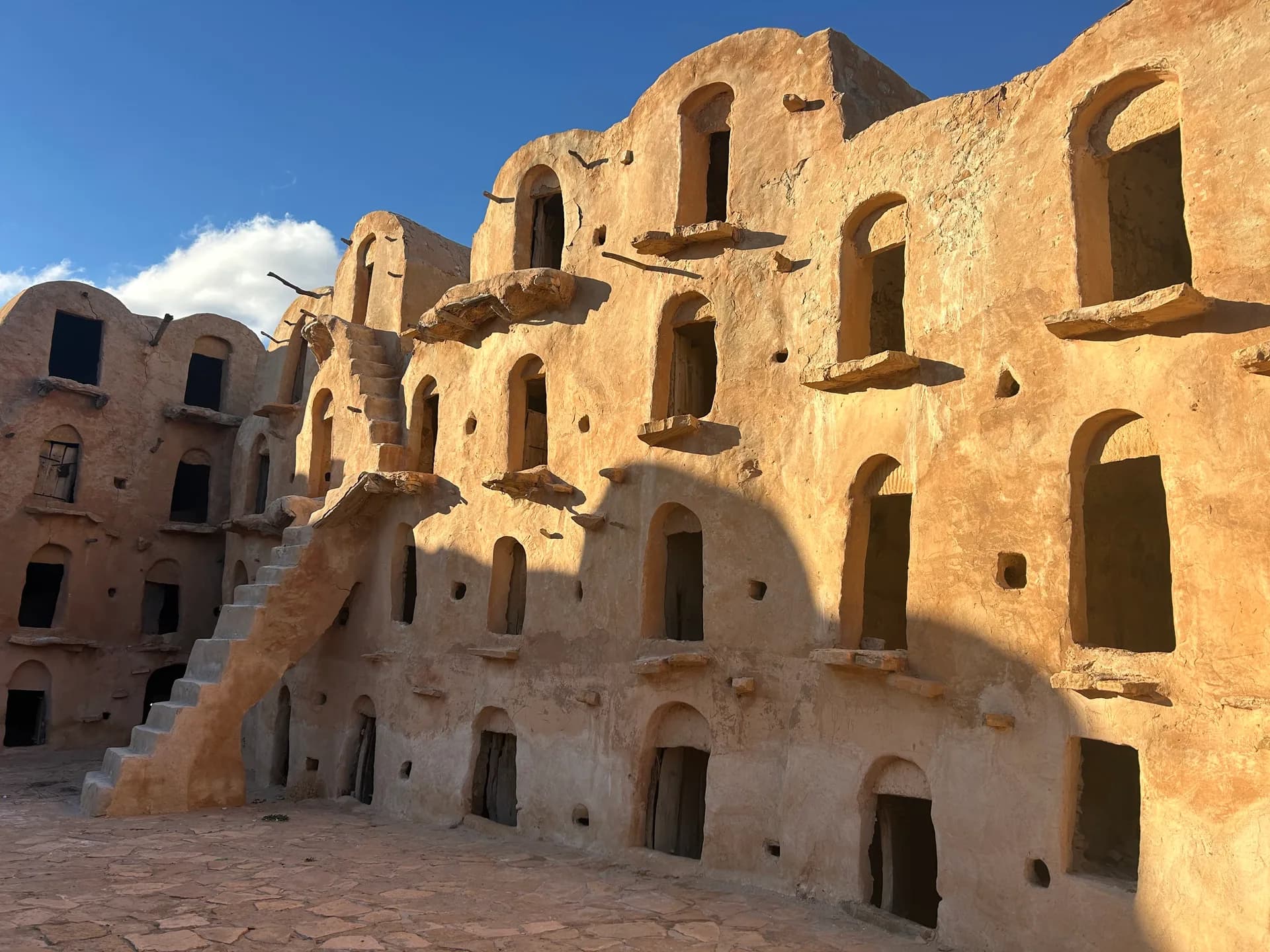
The UNESCO dossier connects the settlement pattern with adaptation to a water-scarce environment. That reference point can help you ask questions about housing and territory. It does not allow you to infer a building's operation independently or assign a single explanation to every architectural form merely because it resembles something you have read about.
Look at boundaries, passages and relationships between open and built spaces. Ask which uses are documented for the place observed and which changes are explained. You can record a detail without claiming to date it or immediately understand its function. This method avoids oversimplified accounts of an architecture assumed to be unchanging. Places may be maintained, adapted or presented to visitors. Understanding those circumstances belongs to discovery rather than trying to remove them from view in order to recover an ideal image of the past. A contemporary detail may be a useful question, not a flaw in the visit.
Take time to read Houmt Souk
Houmt Souk appears in Djerba discovery material published by the Tunisian National Tourist Office. For a cultural walk, you can request a reading of places of exchange, movement and visible uses rather than an itinerary limited to purchasing and photography. The programme should explain what the walk is intended to help you understand.
Choose a straightforward question: how do visitors find their bearings in the spaces included, and which activities are explained? Guidance can help situate stops and distinguish passing observation from an arranged visit. Do not assume that every shop or atelier offers the same framework for welcoming a group. Ask before photographing people or turning a conversation into an interview. Curiosity remains possible without treating every workplace as an attraction available on demand. A thoughtful promenade can combine observation and explanation while respecting the activities already taking place around it.
Guellala: approach objects through precise questions
Pottery provides a starting point for exploring Guellala. To understand an object, ask about its use, origin and the circumstances in which it is presented. A shape or decoration does not by itself establish provenance or technique. A professional's explanation helps avoid conclusions based solely on appearance or on a general description copied from another visit.
Clarify what belongs to a prepared visit, a demonstration and an optional purchase. Buying is not compulsory for an exchange to be meaningful, and it does not provide unlimited access to a maker's time. If you wish to observe a stage of work, confirm it with the person concerned. Do not ask for a gesture to be repeated only to create a more photogenic scene. Discovering a skill becomes more valuable when the conditions of its explanation remain chosen and understandable. An object can retain meaning as a souvenir without becoming evidence of a story that was never confirmed.
Use a museum as another form of interpretation
The Guellala museum describes its project around Djerbian heritage. If you want to include it in your programme, confirm visiting arrangements and available spaces with the responsible organisation or your organiser. An older online presentation should not become a guarantee that particular content will be accessible on your date.
A museum and a field encounter do not contribute the same experience. Ask what a presentation seeks to explain and which information supports it. An exhibited scene does not automatically describe the everyday lives of everyone living on the island. It may serve an interpretation purpose that is worth understanding. Connecting materials, objects and explanations makes the visit more rewarding than simply moving through rooms to complete a list of images. The question is what you can learn from the presentation and how that knowledge relates to the other parts of your journey.
Approach religious buildings with restraint
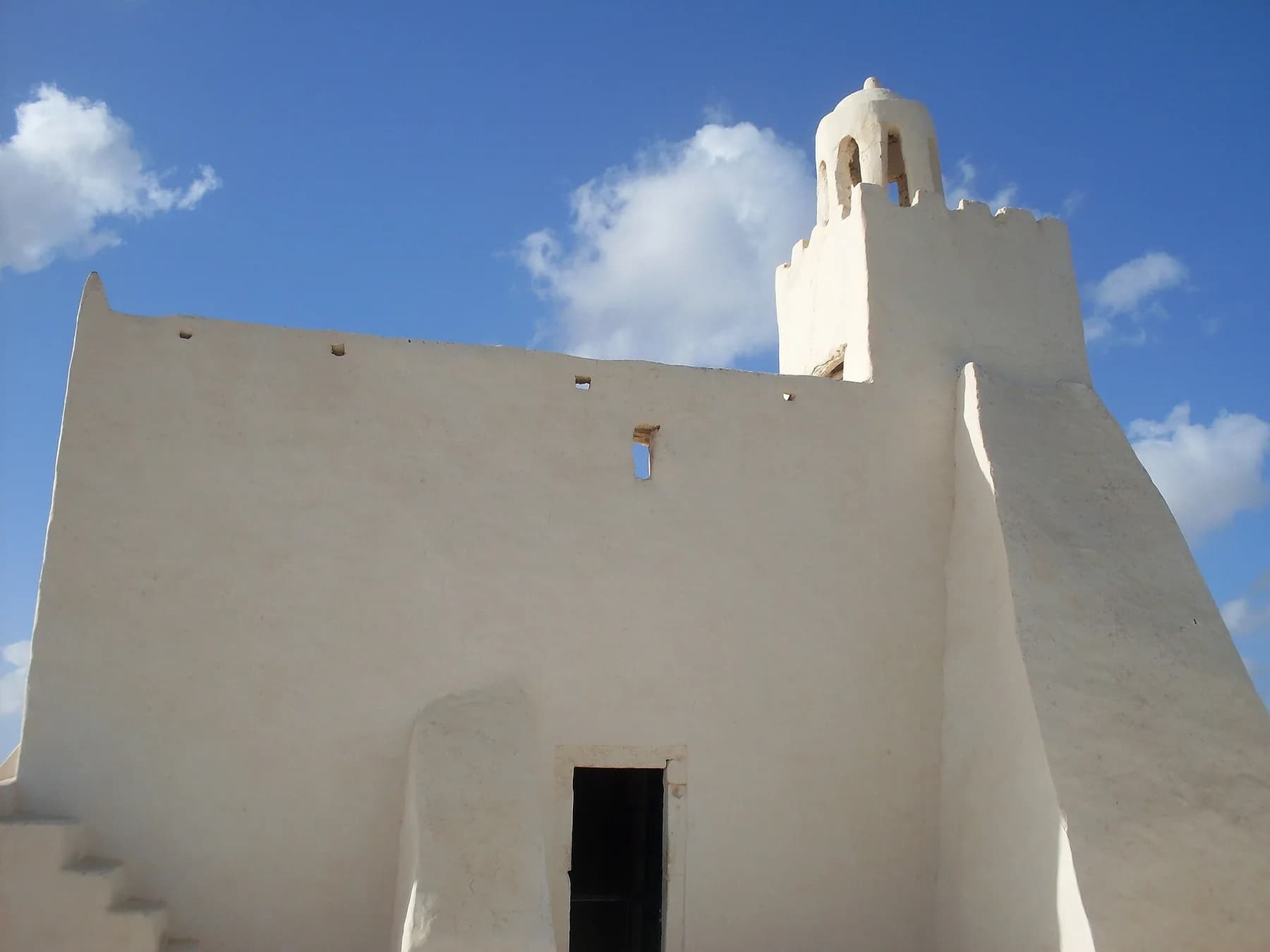
A religious building may attract attention through its forms and presence in the landscape. Its function still needs recognition. Before planning an interior visit, confirm access conditions and relevant instructions. Do not infer public opening solely from a photograph or a mention in a travel article, particularly when the information does not specify a current visiting framework.
Cultural discovery does not require bypassing a boundary. An external observation with an explanation can be relevant, provided the programme describes it honestly. Avoid photographing practices or people without understanding the circumstances. Restraint does not reduce curiosity; it acknowledges that the place exists for purposes beyond tourism. Local instructions and the availability of those responsible should guide practical decisions rather than a promise of exceptional access made in advance. The value of the visit can lie in understanding a place's role without entering every space or obtaining photographs of every activity connected with it.
Prepare encounters without promising intimacy
A conversation about a profession, space or object can enrich a journey. It should be welcome and arranged within a clear framework. Hosts are not obliged to tell their life stories or represent the whole island. Their contribution can be specific, situated and limited to the theme they choose to share with visitors.
Ask how the group's expectations have been prepared and what is confirmed. If an encounter cannot take place, an adaptation should be explained without pretending that another person is an interchangeable equivalent. Our article on respectful encounters offers further guidance. Living heritage is discovered through the possibility of listening, not through a demand to produce an emotion or scene matching travellers' imagination. Clear arrangements help protect that possibility by making everyone's participation understandable rather than relying on an assumption of automatic access to local life.
Build a pace that connects visits
A day can bring together several themes without becoming overcrowded if transfers, explanations and breaks are acknowledged. Ask what takes priority and why the places have been combined. A programme should not reduce every stop to the time required for taking a photograph and leaving, particularly when interpretation is one of the main reasons for the visit.
Pace should also suit the participants. Explain needs for quieter walking, breaks or more detailed guidance. These requirements can influence the selection and organisation of visits. The Nomadstrek map helps locate content, but it does not replace confirmed access or a field programme. Our guide to choosing a journey's pace helps distinguish the number of stops from the quality of available time. An appropriate rhythm gives you a chance to connect one explanation with the next instead of collecting separate impressions that never become a coherent understanding.
Photograph Djerba with honest captions
A photograph of a façade, object or street can be a useful record when its context is retained. Note the place, what was explained and information still needing verification. Avoid treating an isolated image as a complete portrait of Djerba or general evidence about the lives of its inhabitants. A photograph can be meaningful without being representative of everything around it.
Permissions involving people deserve particular attention. Ask before publishing an identifiable image when circumstances require it and distinguish the intended uses. Do not give an unfamiliar person a biography or commercial role you do not know. You can describe discovery through architectural details, objects and notes without exposing private life. A precise caption communicates the journey's meaning better than an authenticity formula applied indiscriminately to every image. It also helps readers understand what is actually known and what is simply the traveller's impression of a moment.
Read offers with attention to local contribution
A cultural proposal should explain who provides the advertised services and how visits are prepared. Ask about contributors' roles, included services and details awaiting confirmation. Visible local participation alone does not demonstrate an equitable benefit or a lasting partnership. Those claims need a framework rather than an assumption based on the setting.
Our article on community-based tourism suggests a way to read these commitments. The aim is to make decisions understandable rather than demand an absolute promise of positive impact. Tours and destinations can open discussion, but your programme should identify the visits actually retained. Clear arrangements contribute to a respectful experience as much as the group's behaviour during exchanges. They also give you a basis for asking specific questions instead of trying to judge a whole organisation from one photograph or a broad promotional statement.
Prepare your request for a cultural stay in Djerba
Explain the themes that interest you, who is travelling and the pace you prefer. You may want an introduction to heritage, an architectural perspective or a group programme focused on interpretation. These aims should shape the proposal before the best-known visits are added simply because they appear in other itineraries.
When contacting Nomadstrek Journeys, describe your questions and the practical information you need. Discovering Djerba's living heritage does not mean seeing everything or gaining access to everything. It means connecting places carefully, recognising their uses and allowing people to choose what they wish to share. Prepared this way, a journey can offer a more precise understanding of the island while leaving open questions worth pursuing after you return. That continuing curiosity is a useful outcome in its own right, without requiring the programme to promise a complete interpretation of every aspect of island life.